

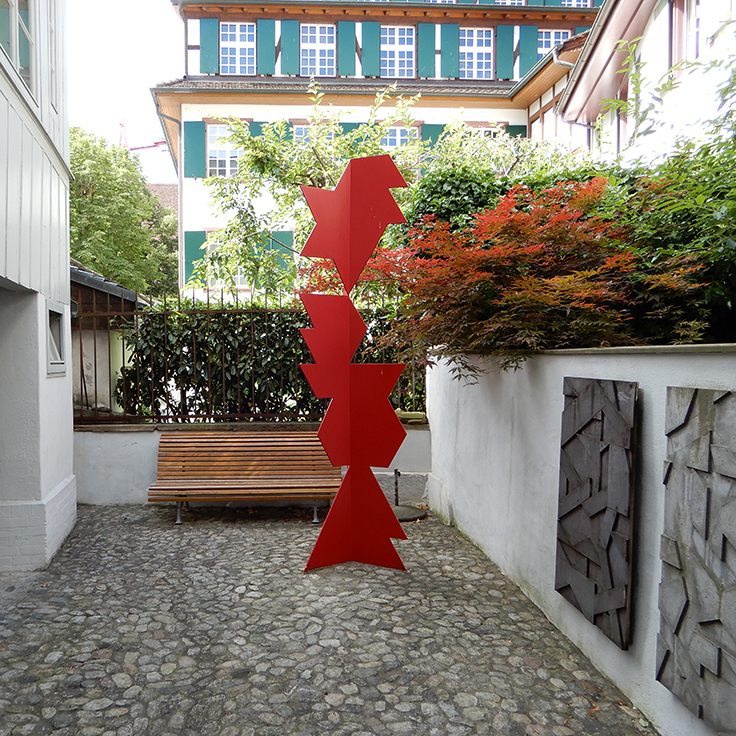
 Das Museum
Das Rappaz Museum wurde 2008 auf Initiative von Gisèle Rappaz-Joly, der Witwe des Basler Künstlers Rolf Rappaz, gegründet und bis zu seiner Schliessung im Dezember 2023 von der Gisèle und Rolf Rappaz Stiftung getragen. Von 2008 bis 2011 stand das Museum unter der Leitung des Künstlers Bruno Gasser. Ihm folgte Frau Dr. Ricarda Gerosa, Literaturwissenschaftlerin, die das Haus von 2012 bis zum Frühjahr 2016 führte. Anschliessend übernahm der Grafikdesigner Armin Vogt die künstlerische Leitung des Hauses und prägte dessen Profil und Ausstellungsprogramm nachhaltig. Jährlich präsentierte das Museum vier bis fünf Ausstellungen mit Fokus auf konstruktiver Kunst und angewandter Grafik. In den 15 Jahren seines Bestehens fanden insgesamt rund fünfzig Einzel- und Gruppenausstellungen statt. Das Museum erstreckte sich über drei Etagen, die unterschiedliche Funktionen erfüllten: Im Erdgeschoss und im ersten Obergeschoss zeigte das Museum wechselnde Ausstellungen mit Arbeiten verschiedener Künstlerinnen und Künstler, während das zweite Obergeschoss dem Werk von Rolf Rappaz dauerhaft gewidmet war und in regelmässigen Abständen neu kuratiert wurde. Als kulturelles Kleinod zeichnete sich das Rappaz Museum durch seine überschaubare Grösse, die enge Zusammenarbeit eines engagierten Teams und eine bemerkenswerte programmatische Offenheit aus. In einem Quartier mit lebendigem sozialem und kulturellem Umfeld war es das einzige Haus in Basel, das sich konsequent der konstruktiven und konkreten Kunst sowie der Grafik widmete. Über die Jahre entwickelte sich das Rappaz Museum zu einem festen Bestandteil der Basler Kunstszene. Es brachte neue Impulse in die Schweizer Kunstlandschaft und bot regionalen Kunstschaffenden nicht nur Ausstellungsfläche, sondern auch Raum für Reflexion und kritischen Austausch. Diese Verankerung zeigte sich auch in der aktiven Teilnahme an städtischen Kulturereignissen wie der Basler Museumsnacht, den Basler Kunsttagen oder dem Jazzfestival «offbeat».
Im Jahr 2021 bot die Gründung des Vereins Les Amis du Musée Rappaz interessierten Personen die Möglichkeit, sich inhaltlich einzubringen und Aspekte der Programmgestaltung zu diskutieren. Die besondere Atmosphäre und das stilvolle Ambiente des Hauses konnten zudem für private und geschäftliche Anlässe genutzt werden. Bis zur Schliessung des Museums Ende 2023 zählte der Verein rund 120 Mitglieder und trug wesentlich dazu bei, den Dialog zwischen Museum, Kunstszene und Öffentlichkeit lebendig zu halten. Die Schliessung des Museums blieb nicht ohne Diskussionen und fand auch in der lokalen Presse ihren Niederschlag. Unter der Leitung von Anja Meierhans wurde der Verein schliesslich am 8. Oktober 2024 offiziell aufgelöst.
Seit 2024 trägt die Institution den Namen «Rappaz – Haus der Basler Grafik» und beschränkt ihr Angebot seither im Wesentlichen auf das in einem Teil des Gebäudes präsentierte Archiv der grafischen Arbeiten von Rolf Rappaz.
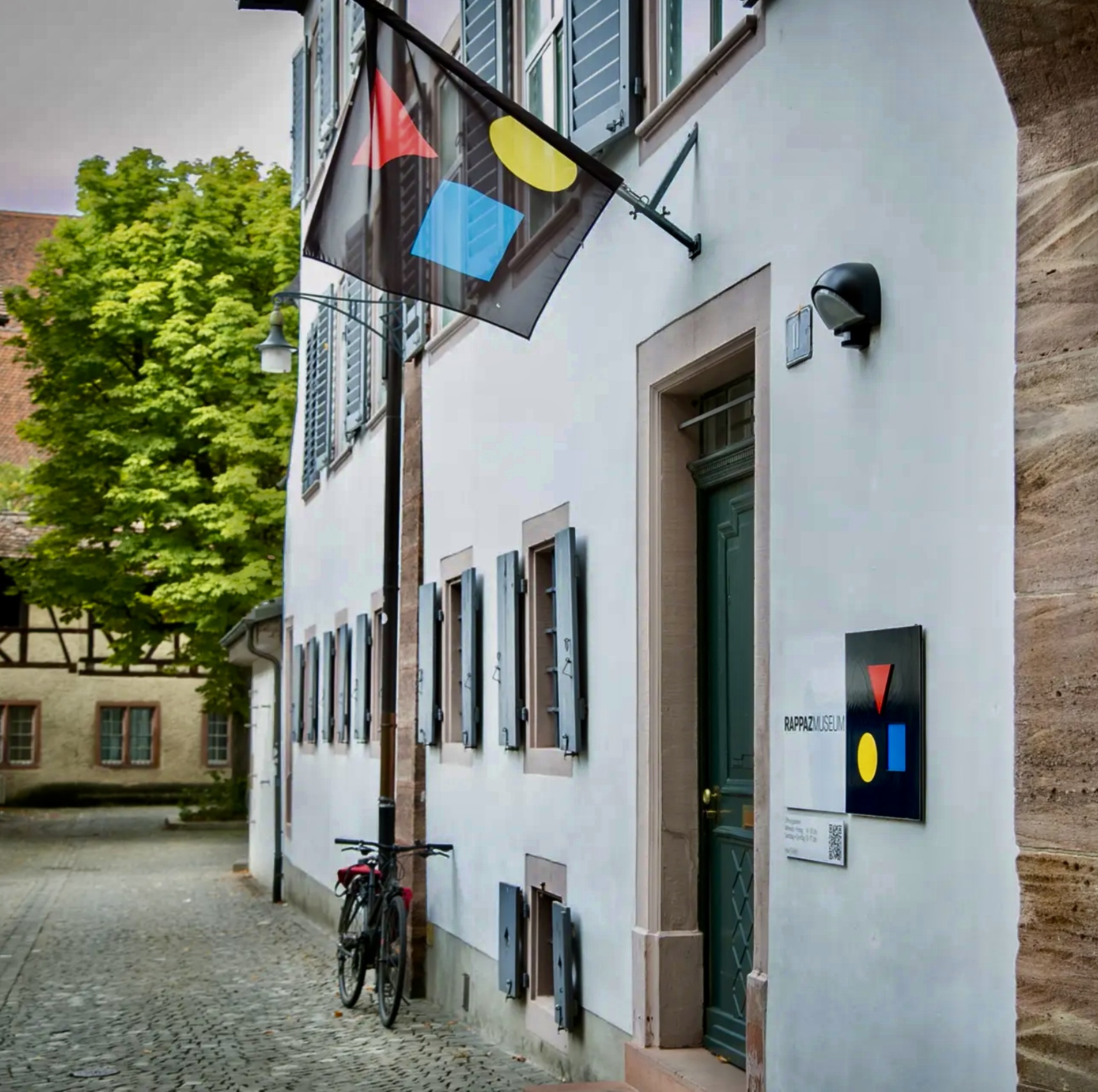 Das Gebäude Klingental 11, bis Ende 2023 Sitz des Rappaz Museums, zählt zu den ältesten Bauwerken Kleinbasels. Seine Ursprünge reichen bis ins 11. Jahrhundert zurück und stehen in enger Verbindung mit dem 1274 am Rheinufer errichteten Nonnenkloster Klingental, das vovon dem Ritter und Minnesänger Walther von Klingen gestiftet wurde. Das Haus grenzt an das ehemalige Klostertor und diente einst als Weberei des Klosters – ein Hinweis darauf findet sich im Namen der benachbarten Webergasse. Kleinbasel war zur Zeit der Klostergründung eine eigenständige Stadt, deren wirtschaftlicher Aufschwung durch die Präsenz des wohlhabenden Frauenklosters entscheidend gefördert wurde. Mit dem Bau der Rheinbrücke im Jahr 1225 setzte eine enge Verbindung zwischen Klein- und Grossbasel ein, die 1392 in der Vereinigung beider Städte mündete. Nach der Reformation 1557 wurde das Kloster aufgehoben. Die Gebäude dienten fortan als Lager-, Gewerbe- und Militärunterkünfte. Sie wurden im 19. Jahrhundert umfassend renoviert, um dem Müller der benachbarten Klingentalmühle als Alterssitz zu dienen. Ein Mühlstein der Müllerfamilie lehnt noch heute an der Fassade des Hauses Klingental 9. Von den einst weit verzweigten Wasserläufen, die zahlreiche Mühlen antrieben, sind heute nur noch wenige Spuren sichtbar.
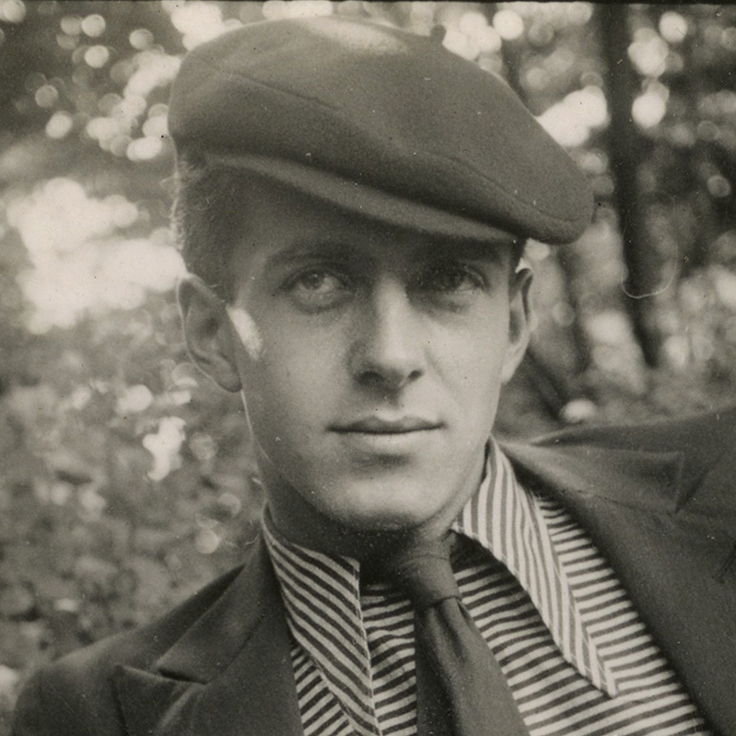 Rolf Rappaz (1914 – 1996)
Biographie Rolf Rappaz wurde am 9. September 1914 in Basel geboren. Nach einer Ausbildung zum Grafiker und dem Besuch der Kunstgewerbeschule in Basel vertiefte er seine Kenntnisse während eines Studienaufenthaltes an der renommierten Académie de la Grande Chaumière in Paris. Bereits 1933 gründete er ein eigenes Atelier für Gebrauchsgrafik, das er ab 1939 kontinuierlich ausbaute und viele Jahre erfolgreich führte. 1954 heiratete er die Grafikerin Gisèle Joly, die fortan seine engste kreative Weggefährtin wurde und maßgeblich an zahlreichen gemeinsamen Projekten beteiligt war. In den 1960er Jahren wandte sich Rappaz ganz der freien Kunst zu und gab seine Tätigkeit als Gebrauchsgrafiker auf. Ein wichtiger Meilenstein in seiner künstlerischen Laufbahn war die grosse Ausstellung in der Kunsthalle Bern 1972, kuratiert von Carlo Huber. Rolf Rappaz starb 1996. Im selben Jahr wurde die Gisèle und Rolf Rappaz Stiftung gegründet. Nach einer aufwändigen Restauration des Gebäudes wurde sein ehemaliges Atelier als das Musée Rappaz eröffnet, das nun sein Werk der Öffentlichkeit dauerhaft zugänglich macht.
Grafik Rolf Rappaz zählt zu den Pionieren der selbstständigen Grafikgestalter in der Schweiz und hat zusammen mit anderen prägenden Persönlichkeiten die Entwicklung der Schweizer Grafik wesentlich mitgeprägt. Als Gründungsmitglied der Ortsgruppe Basel des Verbands Schweizer Grafiker setzte er sich aktiv für die Professionalisierung des Berufsstandes ein. Von 1942 bis 1945 unterrichtete er als Fachlehrer für Grafik an der Basler Kunstgewerbeschule, der heutigen Schule für Gestaltung. Zu seinen herausragenden Projekten zählen die Präsentation des Schweizer Tourismus anlässlich der Weltausstellung in Brüssel 1958, die Neugestaltung des Museums „Unser Weg zum Meer“ der Schweizerischen Reederei in Basel sowie die mehrmalige Gestaltung der Firestone-Messestände auf der Basler Mustermesse. Die Schweizer Grafik, insbesondere Typografie und Schriftgestaltung, wurde von der UNESCO als immaterielles Kulturerbe anerkannt und ausgezeichnet. Im Rahmen einer Initiative der Swiss Graphic Design Foundation konnte eine ausgewählte Sammlung von grafischen und werbetechnischen Arbeiten von Gisèle und Rolf Rappaz dem Schweizerischen Landesmuseum in Zürich als Schenkung übergeben werden.
Kunst Ab Mitte der 1960er Jahre konzentrierte sich Rolf Rappaz ganz auf seine künstlerische Arbeit. Er entwickelte ein komplexes Ausdruckssystem, das auf der Permutation der geometrischen Grundformen Kreis, Quadrat und Dreieck sowie der Grundfarben Rot, Gelb und Blau, ergänzt durch Schwarz und Weiss, basiert. Bevor ein Werk auf der Leinwand entstand, erarbeitete Rappaz in akribisch ausgeführten Entwurfs-Skizzen zahlreiche Varianten. Jede Zeichnung war exakt beschriftet – mit Angaben zu Massen, Technik und Bildformat. Erst wenn die für ihn ideale Form gefunden war, setzte er sie auf Leinwand um. Diese präzise Dokumentation der Permutationsergebnisse, ergänzt durch Modelle und schriftliche Ausführungsanleitungen, verweist auf ein Kunstverständnis, das dem der minimalen und konzeptuellen Kunst nahesteht. Dabei rückt die Idee oder das Konzept eines Werkes klar in den Vordergrund – wird wichtiger als seine materielle Umsetzung.
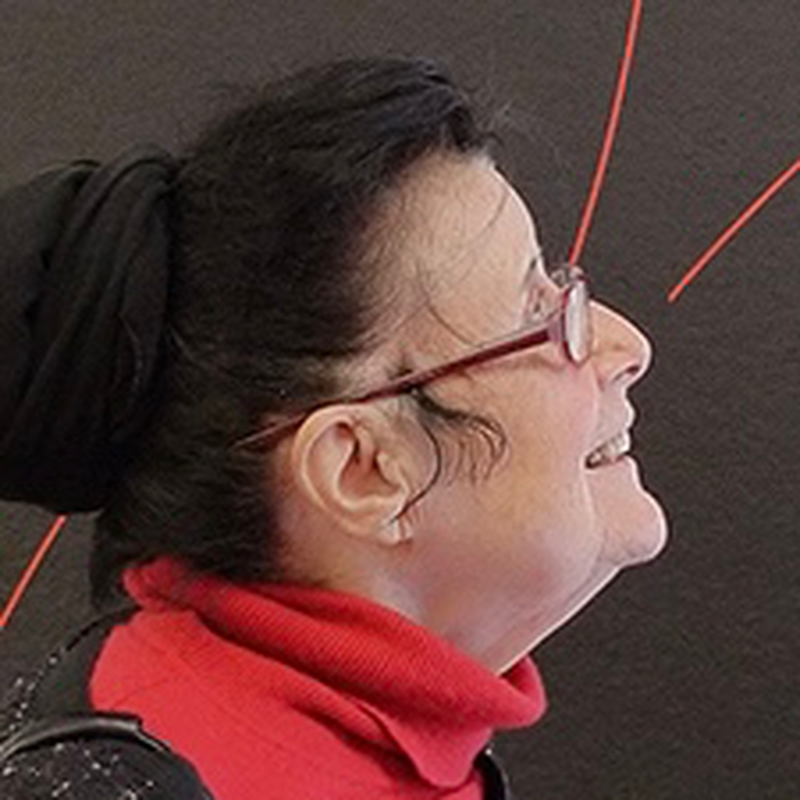 Gisèle Rappaz-Joly (1931 – 2022)
Nachruf In den Morgenstunden des 21. Dezember 2022 ist Gisèle Rappaz-Joly von uns gegangen. Wir betrauern einen immensen Verlust für die Gisèle und Rolf Rappaz Stiftung, deren Stiftungsrats-Präsidentin sie war, insbesondere aber auch für das von ihr ins Leben gerufene Rappaz Museum, seit dessen Eröffnung sie das Oeuvre ihres Mannes über ein Vierteljahrhundert lang hingebungsvoll pflegte und grosszügig unterstützte. Rolf Rappaz, Jahrgang 1914, der Namensgeber des Museums, durchlief eine gründliche Berufsausbildung zum grafischen Gestalter in seiner Heimatstadt Basel und in Paris. Bereits in den 1930er Jahren gründete er sein eigenes, erfolgreiches Atelier für Gebrauchsgrafik, in das Gisèle Joly ein gutes Dutzend Jahre später eintreten, fortan als seine rechte Hand fungieren und schon bald seine Ehepartnerin werden sollte. Nicht zuletzt ihrer tatkräftigen Mitwirkung ist es zu verdanken, dass Rolf Rappaz den Status einer Ikone der Schweizer Werbegrafik erlangte. Auch als er Mitte der 1960er Jahre seine Tätigkeit als Grafiker aufgeben und sich ausschliesslich seiner eigenen Kunst widmen sollte, pflegten er und seine Frau Giséle ein geradezu symbiotisches Arbeitsverhältnis. Mit Gisèle Rappaz-Joly trauern Mitarbeiterinnen und Mitarbeiter der Gisèle und Rolf Rappaz Stiftung und des Rappaz Museums um den Verlust einer grossen Persönlichkeit, einer stilvoller Erscheinung und auch einer warmherzigen Frau voller Empathie, die allen, die über die Jahre mit ihr zu tun hatten, fehlen wird.
Armin Vogt | Udo Breger
Le Musée Rappaz
Le musée a été fondé en 2008 à l’initiative de Gisèle Rappaz-Joly, veuve de l’artiste bâlois Rolf Rappaz, et a été soutenu jusqu’à sa fermeture en décembre 2023 pa la Fondation Gisèle et Rolf Rappaz. De 2008 à 2011, le musée a été dirigé par l’artiste Bruno Gasser. Il a été succédé par Mme Ricarda Gerosa, docteure en littérature, qui a dirigé l’établissement de 2012 au printemps 2016. Par la suite, le graphiste Armin Vogt a repris la direction artistique du musée et en a durablement marqué le profil ainsi que le programme d’expositions. Chaque année, le musée présentait quatre à cinq expositions mettant l’accent sur l’art construit et le graphisme appliqué. Au cours de ses quinze années d’existence, environ cinquante expositions individuelles et collectives y ont été organisées. Le musée s’étendait sur trois étages aux fonctions distinctes : le rez-de-chaussée et le premier étage accueillaient des expositions temporaires d’artistes variés, tandis que le deuxième étage était consacré de manière permanente à l’œuvre de Rolf Rappaz, régulièrement reconfigurée. Véritable joyau culturel, le Musée Rappaz se distinguait par sa taille modeste, la collaboration étroite d’une équipe engagée et une remarquable ouverture programmatique. Situé dans un quartier à la vie sociale et culturelle animée, il était le seul lieu à Bâle à se consacrer de manière cohérente à l’art construit et concret ainsi qu’au graphisme. Au fil des années, le Musée Rappaz s’est imposé comme un élément incontournable de la scène artistique bâloise. Il a apporté de nouvelles impulsions au paysage artistique suisse et offert aux artistes régionaux non seulement un espace d’exposition, mais aussi un lieu de réflexion et d’échange critique. Cet ancrage s’est également manifesté par sa participation active à des événements culturels urbains tels que la Nuit des musées de Bâle («Basler Museumsnacht»), les Journées de l’art de Bâle («Basler Kunsttage») ou le festival de jazz «offbeat».
En 2021, la création de l’association « Les Amis du Musée Rappaz » a permis aux personnes intéressées de s’impliquer sur le plan des contenus et de participer à la réflexion autour de la programmation. L’atmosphère particulière et le cadre élégant du lieu pouvaient en outre être utilisés pour des événements privés ou professionnels. Jusqu’à la fermeture du musée fin 2023, l’association comptait environ 120 membres et a contribué de manière significative à maintenir vivant le dialogue entre le musée, la scène artistique et le public. La fermeture du musée n’est pas restée sans susciter des discussions et a également trouvé un écho dans la presse locale. Sous la direction d’Anja Meierhans, l’association a finalement été officiellement dissoute le 8 octobre 2024.
Depuis 2024, l’institution porte le nom «Rappaz – Haus der Basler Grafik» et limite depuis lors essentiellement son offre à l’archive des œuvres graphiques de Rolf Rappaz, présentée dans une partie du bâtiment.
Le bâtiment du Klingental 11, qui abritait le Musée Rappaz jusqu’à fin 2023, compte parmi les plus anciens édifices du Petit-Bâle. Ses origines remontent au XIe siècle et sont étroitement liées au couvent de religieuses de Klingental, fondé en 1274 sur les rives du Rhin par le chevalier et Minnesänger Walther von Klingen. La maison jouxte l’ancienne porte du couvent et servait autrefois de tissage pour celui-ci — une fonction encore évoquée par le nom de la Webergasse voisine. À l’époque de la fondation du couvent, le Petit-Bâle constituait une ville indépendante, dont l’essor économique fut largement favorisé par la présence de ce riche monastère féminin. La construction du pont sur le Rhin en 1225 a établi un lien étroit entre Petit et Grand-Bâle, aboutissant en 1392 à leur réunification. Après la Réforme en 1557, le couvent fut supprimé. Les bâtiments furent alors utilisés comme entrepôts, ateliers et logements militaires. Au XIXe siècle, l’édifice fut entièrement rénové afin de servir de résidence au meunier du moulin voisin de Klingental. Une meule appartenant autrefois à la familie du meunier est encore aujourd’hui adossée à la façade de la Maison Kingeltal 9. Des anciens cours d’eau, autrefois nombreux et alimentant plusieurs moulins, il ne subsiste aujourd’hui que quelques traces visibles.
Rolf Rappaz (1914 – 1996)
Biographie Rolf Rappaz est né le 9 septembre 1914 à Bâle. Après une formation de graphiste et des études à l’École des arts appliqués de Bâle, il approfondit ses connaissances lors d’un séjour à la prestigieuse Académie de la Grande Chaumière à Paris. Dès 1933, il fonde son propre atelier de graphisme publicitaire, qu’il développe continuellement à partir de 1939 et dirige avec succès pendant de nombreuses années. En 1954, il épouse la graphiste Gisèle Joly, qui devient dès lors sa plus proche collaboratrice artistique et participe de manière déterminante à de nombreux projets communs. Dans les années 1960, Rappaz se consacre entièrement à l’art libre et abandonne son activité de graphiste publicitaire. Une étape importante de sa carrière artistique est la grande exposition organisée à la Kunsthalle de Berne en 1972, sous le commissariat de Carlo Huber. Rolf Rappaz meurt en 1996. La même année est créée la Fondation Gisèle et Rolf Rappaz. Après une restauration approfondie du bâtiment, son ancien atelier est ouvert sous le nom de Musée Rappaz, rendant son œuvre durablement accessible au public.
Graphisme Rolf Rappaz compte parmi les pionniers du graphisme indépendant en Suisse et a contribué de manière significative, avec d’autres personnalités marquantes, au développement du graphisme suisse. Membre fondateur du groupe local bâlois de l’Association des graphistes suisses, il s’engage activement pour la professionnalisation du métier. De 1942 à 1945, il enseigne en tant que professeur de graphisme à l’École des arts appliqués de Bâle, aujourd’hui École de design. Parmi ses projets les plus importants figurent la présentation du tourisme suisse à l’Exposition universelle de Bruxelles en 1958, la refonte du musée « Notre chemin vers la mer » de la compagnie de navigation suisse à Bâle, ainsi que la conception répétée des stands Firestone à la Foire de Bâle. Le graphisme suisse, notamment la typographie et la création de caractères, a été reconnu et inscrit par l’UNESCO comme patrimoine culturel immatériel. Dans le cadre d’une initiative de la Swiss Graphic Design Foundation, une sélection d’œuvres graphiques et publicitaires de Gisèle et Rolf Rappaz a été offerte au Musée national suisse à Zurich.
Art À partir du milieu des années 1960, Rolf Rappaz se consacre entièrement à son travail artistique. Il développe un système d’expression complexe fondé sur la permutation des formes géométriques de base – cercle, carré et triangle – ainsi que des couleurs primaires rouge, jaune et bleu, complétées par le noir et le blanc. Avant la réalisation d’une œuvre sur toile, Rappaz élabore de nombreuses variantes à travers des esquisses préparatoires minutieusement exécutées. Chaque dessin est précisément annoté, avec des indications concernant les dimensions, la technique et le format. Ce n’est qu’une fois la forme idéale trouvée qu’il la transpose sur la toile. Cette documentation rigoureuse des permutations, enrichie de maquettes et d’instructions écrites, témoigne d’une conception de l’art proche de l’art minimal et conceptuel. L’idée ou le concept de l’œuvre y occupe une place centrale, primant sur sa réalisation matérielle.
Gisèle Rappaz-Joly (1931 – 2022)
Nécrologie Aux premières heures du 21 décembre 2022, Gisèle Rappaz-Joly nous a quittés. Nous déplorons une immense perte humaine pour la Fondation Gisèle et Rolf Rappaz, dont elle était la présidente du conseil de fondation, mais aussi et surtout pour le Musée Rappaz qu’elle avait fondé. Depuis son ouverture, elle a veillé avec dévouement, pendant plus d’un quart de siècle, à la préservation et au rayonnement de l’œuvre de son mari bien-aimé, qu’elle a soutenue avec une grande générosité. Rolf Rappaz, né en 1914 et dont le musée porte le nom, suivit une formation approfondie de graphiste dans sa ville natale de Bâle ainsi qu’à Paris. Dès les années 1930, il fonda son propre atelier de graphisme publicitaire, couronné de succès. Une bonne douzaine d’années plus tard, Gisèle Joly rejoignit cet atelier, devint rapidement sa collaboratrice la plus proche, puis son épouse. C’est aussi grâce à son engagement actif que Rolf Rappaz acquit le statut d’icône du graphisme publicitaire suisse. Même lorsque, au milieu des années 1960, il abandonna son activité de graphiste pour se consacrer exclusivement à son œuvre artistique, Rolf Rappaz et son épouse Gisèle continuèrent d’entretenir une relation de travail presque symbiotique. Avec la disparition de Gisèle Rappaz-Joly, les collaboratrices et collaborateurs de la Fondation Gisèle et Rolf Rappaz et du Musée Rappaz perdent une personnalité d’exception, une figure élégante, mais aussi une femme chaleureuse et profondément empathique, dont tous ceux qui ont croisé le chemin garderont un souvenir précieux.
Armin Vogt | Udo Breger
Il Museo Rappaz
Il museo è stato fondato nel 2008 su iniziativa di Gisèle Rappaz-Joly, vedova dell’artista basilese Rolf Rappaz, e fino alla sua chiusura, avvenuta nel dicembre 2023, è stato sostenuto dalla Fondazione Gisèle e Rolf Rappaz. Dal 2008 al 2011, il museo è stato diretto dall’artista Bruno Gasser. Gli è succeduta la dott.ssa Ricarda Gerosa, studiosa di letteratura, che ha guidato l’istituzione dal 2012 alla primavera del 2016. In seguito, il graphic designer Armin Vogt ha assunto la direzione artistica, contribuendo in modo determinante a definire il profilo e il programma espositivo del museo. Ogni anno il museo ha presentato da quattro a cinque mostre, con un’attenzione particolare all’arte costruttiva e alla grafica applicata. Nel corso dei suoi 15 anni di attività, sono state realizzate complessivamente circa cinquanta mostre personali e collettive.Il museo si sviluppava su tre piani, ciascuno con una funzione specifica: al piano terra e al primo piano erano allestite mostre temporanee con opere di vari artisti, mentre il secondo piano era permanentemente dedicato alle opere di Rolf Rappaz e veniva periodicamente riallestito. Il Museo Rappaz, piccolo gioiello culturale, si distingueva per le sue dimensioni contenute, la stretta collaborazione di un team impegnato e l’apertura programmatica. Situato in un quartiere caratterizzato da una vivace vita sociale e culturale, il museo era l’unica istituzione a Basilea interamente dedicata all’arte costruttiva e concreta, nonché alla grafica. Nel corso degli anni, il Museo Rappaz è diventato una presenza consolidata nella scena artistica basilese. Ha apportato nuovi impulsi al panorama artistico svizzero, offrendo agli artisti della regione non solo uno spazio espositivo, ma anche un luogo di riflessione e di scambio critico. Il suo radicamento si è manifestato anche attraverso la partecipazione attiva a eventi culturali cittadini come la, den Notte dei Musei di Basilea («Basler Museumsnacht»), le Giornate dell’Arte di Basilea («Basler Kunsttage») e il festival jazz «offbeat».
Nel 2021, con la fondazione dell’associazione “Les Amis du Musée Rappaz”, è stata offerta agli interessati la possibilità di contribuire ai contenuti e di partecipare alle discussioni sulla programmazione. L’atmosfera particolare e l’ambiente elegante del museo erano inoltre a disposizione per eventi privati e aziendali. Alla alla chiusura del museo, avvenuta alla fine del 2023, l’associazione contava circa 120 membri e ha contribuito in modo significativo a mantenere vivo il dialogo tra museo, scena artistica e pubblico. La chiusura del museo non è passata inosservata ed è stata ripresa anche dalla stampa locale. Sotto la direzione di Anja Meierhans, l’associazione è stata infine ufficialmente sciolta l’8 ottobre 2024.
Dal 2024 l’istituzione porta il nome di «Rappaz – Haus der Basler Grafik» e da allora limita la propria offerta essenzialmente all’archivio delle opere grafiche di Rolf Rappaz, esposto in una parte dell’edificio.
L’edificio di Klingental 11, sede del Museo Rappaz fino alla fine del 2023, è uno dei più antichi di Kleinbasel. Le sue origini risalgono all’XI secolo e sono strettamente legate al convento femminile di Klingental, fondato nel 1274 sulle rive del Reno dal cavaliere e Minnesänger Walther von Klingen. La casa confina con l’antica porta del convento e un tempo ospitava la tessitura del monastero — un riferimento che si ritrova ancora oggi nel nome della vicina Webergasse. All’epoca della fondazione del convento, Kleinbasel era una città indipendente, il cui sviluppo economico fu notevolmente favorito dalla presenza del ricco monastero femminile. Con la costruzione del ponte sul Reno nel 1225 si instaurò uno stretto legame tra Kleinbasel e Grossbasel, culminato nel 1392 con l’unione delle due città. Dopo la Riforma del 1557, il convento fu soppresso e gli edifici furono successivamente utilizzati come magazzini, spazi artigianali e alloggi militari. Nel XIX secolo l’edificio fu completamente ristrutturato per servire come residenza per la vecchiaia del mugnaio del vicino mulino di Klingental. Una macina appartenente alla famiglia del mugnaio è ancora oggi appoggiata alla facciata della casa Klingental 9. Dell’antica rete ramificata di corsi d’acqua, che un tempo azionavano numerosi mulini, oggi rimangono visibili solo poche tracce.
Rolf Rappaz (1914 – 1996)
Biografia Rolf Rappaz nacque il 9 settembre 1914 a Basilea. Dopo una formazione come grafico e gli studi presso la Scuola d’arte applicata di Basilea, approfondì le sue conoscenze durante un soggiorno di studio presso la rinomata Académie de la Grande Chaumière di Parigi. Già nel 1933 fondò un proprio atelier di grafica applicata, che a partire dal 1939 ampliò costantemente, dirigendolo con successo per molti anni. Nel 1954 sposò la grafica Gisèle Joly, che divenne da allora la sua più stretta compagna di percorso creativo e partecipò in modo determinante a numerosi progetti comuni. Negli anni Sessanta Rappaz si dedicò interamente all’arte libera, abbandonando l’attività di grafico applicato. Una tappa fondamentale della sua carriera artistica fu la grande mostra alla Kunsthalle di Berna nel 1972, curata da Carlo Huber. Rolf Rappaz morì nel 1996. Nello stesso anno fu istituita la Fondazione Gisèle e Rolf Rappaz. Dopo un accurato restauro dell’edificio, il suo ex atelier fu inaugurato come Musée Rappaz, rendendo il suo lavoro accessibile al pubblico in modo permanente.
Grafica Rolf Rappaz è considerato uno dei pionieri della grafica indipendente in Svizzera e, insieme ad altre figure di rilievo, contribuì in modo determinante allo sviluppo della grafica svizzera. In qualità di membro fondatore della sezione di Basilea dell’Associazione dei grafici svizzeri, si impegnò attivamente per la professionalizzazione della professione. Dal 1942 al 1945 insegnò come docente di grafica presso la Scuola d’arte applicata di Basilea, oggi Scuola di design. Tra i suoi progetti più importanti figurano la presentazione del turismo svizzero all’Esposizione universale di Bruxelles del 1958, il riallestimento del museo «Unser Weg zum Meer» della compagnia di navigazione svizzera a Basilea e la progettazione, in più occasioni, degli stand Firestone alla Fiera campionaria di Basilea. La grafica svizzera, in particolare la tipografia e il design dei caratteri, è stata riconosciuta dall’UNESCO come patrimonio culturale immateriale. Nell’ambito di un’iniziativa della Swiss Graphic Design Foundation, una selezione di opere grafiche e pubblicitarie di Gisèle e Rolf Rappaz è stata donata al Museo nazionale svizzero di Zurigo.
Arte A partire dalla metà degli anni Sessanta, Rappaz si dedicò esclusivamente alla propria attività artistica. Sviluppò un complesso sistema espressivo basato sulla permutazione delle forme geometriche fondamentali – cerchio, quadrato e triangolo – e dei colori primari rosso, giallo e blu, integrati dal nero e dal bianco. Prima di realizzare un’opera su tela, elaborava numerose varianti attraverso schizzi progettuali estremamente accurati. Ogni disegno era accompagnato da annotazioni precise relative a misure, tecnica e formato. Solo quando aveva raggiunto la forma per lui ideale, la trasferiva su tela. Questa rigorosa documentazione dei risultati delle permutazioni, completata da modelli e istruzioni scritte per l’esecuzione, rimanda a una concezione dell’arte vicina al minimalismo e all’arte concettuale. In essa, l’idea o il concetto dell’opera assumono un ruolo centrale, prevalendo sulla sua realizzazione materiale.
Gisèle Rappaz-Joly (1931 – 2022)
Necrologio Nelle prime ore del mattino del 21 dicembre 2022, Gisèle Rappaz-Joly ci ha lasciati. Con la sua scomparsa piangiamo una perdita immensa, umanamente e per la Fondazione Gisèle e Rolf Rappaz, di cui era presidente del consiglio, ma in particolare anche per il Musée Rappaz da lei fondato. Sin dalla sua apertura, per oltre un quarto di secolo, si è dedicata con instancabile impegno alla cura e alla valorizzazione dell’opera del suo amato marito, sostenendola con grande generosità. Rolf Rappaz, nato nel 1914 e cui il museo deve il nome, ricevette una solida formazione come grafico nella sua città natale Basilea e a Parigi. Già negli anni Trenta fondò un proprio atelier di grafica applicata di grande successo, nel quale Gisèle Joly entrò circa una dozzina di anni più tardi, divenendo la sua collaboratrice più fidata e presto anche sua moglie. Non da ultimo grazie al suo attivo contributo, Rolf Rappaz raggiunse lo status di icona della grafica pubblicitaria svizzera. Anche quando, a metà degli anni Sessanta, abbandonò la professione di grafico per dedicarsi esclusivamente alla propria arte, tra lui e Gisèle si mantenne un rapporto di lavoro quasi simbiotico. Con Gisèle Rappaz-Joly, le collaboratrici e i collaboratori della Fondazione Gisèle e Rolf Rappaz e del Musée Rappaz piangono una grande personalità, una figura di grande eleganza e una donna di profonda umanità ed empatia, che mancherà a tutti coloro che hanno avuto modo di incontrarla nel corso degli anni.
Armin Vogt | Udo Breger
The Rappaz Museum
The museum was founded in 2008 by Gisèle Rappaz-Joly, the widow of Basel-based artist Rolf Rappaz. It was supported by the Gisèle and Rolf Rappaz Foundation until its closure in December 2023. From 2008 to 2011, the museum was directed by the artist Bruno Gasser. From 2008 to 2011, the museum was directed by the artist Bruno Gasser. He was succeeded by Dr Ricarda Gerosa, a literary scholar, who directed the museum from 2012 until spring 2016. Subsequently, the graphic designer Armin Vogt took on the role of artistic director, shaping the museum’s profile and exhibition programme in a lasting way. Each year, the museum presented four to five exhibitions focusing on constructive art and applied graphic design. During its 15 years of operation, the museum hosted around fifty solo and group exhibitions. Spread over three floors, the museum featured changing exhibitions by various artists on the ground and first floors, while the second floor was permanently dedicated to the work of Rolf Rappaz and was regularly re-curated. The Rappaz Museum was a cultural gem of modest scale. It was distinguished by its intimate size, the close collaboration of a dedicated team, and a remarkable openness in its programme. Situated in a neighbourhood with a vibrant social and cultural life, it was the only institution in Basel dedicated to constructive and concrete art, as well as graphic design, on a consistent basis. Over the years, the Rappaz Museum became an integral part of Basel’s art scene. It introduced new impulses into the Swiss art landscape, offering regional artists exhibition space and a platform for reflection and critical discussion. Its active participation in major city events such as Basel Museums Night («Basler Museumsnacht»), the Basel Art Days («Basler Kunsttage»)and the ‚offbeat‘ jazz festival also demonstrated this rootedness.
The founding of the association Les Amis du Musée Rappaz in 2021 offered interested individuals the opportunity to contribute ideas and engage in discussions on programme development. The museum’s unique atmosphere and elegant setting could also be hired for private and corporate events. By the time the museum closed at the end of 2023, the association had around 120 members and had played a significant role in fostering dialogue between the museum, the art scene and the public. The museum’s closure sparked debate and was covered in the local press. On 8 October 2024, under the leadership of Anja Meierhans, the association was formally dissolved.
Since 2024, the building has been known as the «Rappaz – Haus der Basler Grafik» with parts of the premises housing the archive of Rolf Rappaz’s graphic works.
The building at Klingental 11, which housed the Rappaz Museum until the end of 2023, is one of the oldest structures in Kleinbasel. Dating back to the 11th century, it is closely linked to the Klingental convent, which was founded in 1274 by the knight and minstrel Walther von Klingen on the banks of the Rhine. Adjoining the former convent gate, the house once served as the convent’s weaving workshop, a legacy reflected in the name of the nearby Webergasse. When the convent was founded, Kleinbasel was an independent town whose economic development was greatly stimulated by the presence of this wealthy convent for women. The construction of the Rhine bridge in 1225 initiated close ties between Kleinbasel and Grossbasel, which culminated in their unification in 1392. Following the Reformation of 1557, the convent was dissolved and its buildings were used for storage, workshops and military quarters. In the 19th century, the building underwent extensive renovations to serve as a retirement residence for the miller of the nearby Klingental Mill. A millstone belonging to the miller’s family can still be seen leaning against the Klingental 9 façade. Only a few traces remain visible today of the extensive network of waterways that once powered numerous mills.
Rolf Rappaz (1914 – 1996)
Biography Rolf Rappaz was born on 9 September 1914 in Basel. After training as a graphic designer at the School of Applied Arts in Basel, he continued his studies at the renowned Académie de la Grande Chaumière in Paris. He founded his own studio for commercial graphic design as early as 1933, steadily expanding it from 1939 onwards before running it successfully for many years. In 1954, he married the graphic designer Gisèle Joly, who became his closest creative companion and played a key role in numerous joint projects. In the 1960s, Rappaz turned entirely to fine art, abandoning his work as a commercial graphic designer. A significant milestone in his artistic career was the major exhibition at the Kunsthalle Bern in 1972, curated by Carlo Huber. Rolf Rappaz died in 1996. The Gisèle and Rolf Rappaz Foundation was established in the same year. Following the building’s extensive restoration, his former studio was opened as the Musée Rappaz, making his work permanently accessible to the public.
Graphic Design Rolf Rappaz is widely regarded as one of the pioneers of independent graphic design in Switzerland. Together with other leading figures, he played a decisive role in shaping the development of Swiss graphic design. As a founding member of the Basel chapter of the Association of Swiss Graphic Designers, he actively promoted the professionalisation of the field. From 1942 to 1945, he taught graphic design at the Basel School of Applied Arts, now known as the School of Design. His most notable projects include presenting Swiss tourism at the 1958 World Exhibition in Brussels, redesigning the Unser Weg zum Meer museum for the Swiss shipping company in Basel, and repeatedly designing Firestone exhibition stands for the Basel Trade Fair. Swiss graphic design, particularly typography and type design, has been recognised by UNESCO as intangible cultural heritage. As part of an initiative by the Swiss Graphic Design Foundation, a selection of graphic and advertising works by Gisèle and Rolf Rappaz was donated to the Swiss National Museum in Zurich.
Art From the mid-1960s onwards, Rappaz devoted himself entirely to his art. He developed a complex system of expression based on permutations of fundamental geometric shapes – circles, squares and triangles – and primary colours – red, yellow and blue – complemented by black and white. Before transferring a work to canvas, Rappaz would develop numerous variations through meticulously prepared preliminary sketches. Each drawing was precisely annotated, including details on dimensions, technique, and format. Only once he had found the ideal form did he execute it on canvas. This precise documentation of the results of permutations, supplemented by models and written instructions for execution, reflects an understanding of art closely aligned with Minimal and Conceptual Art. In this approach, the idea or concept of a work clearly takes precedence over its material realisation.
Gisèle Rappaz-Joly (1931 – 2022)
Obituary Gisèle Rappaz-Joly passed away in the early hours of 21 December 2022. The Gisèle and Rolf Rappaz Foundation, of which she was president, and the Musée Rappaz, which she founded, have suffered an immense personal loss. From the museum’s opening, she devoted over twenty-five years to caring for and promoting her beloved husband’s work, supporting it with unwavering dedication and generosity. Rolf Rappaz, born in 1914 and the namesake of our museum, received thorough professional training as a graphic designer in his hometown of Basel and in Paris. As early as the 1930s, he set up his own successful commercial graphic design studio, which Gisèle Joly joined some twelve years later. She became his trusted collaborator, his “right hand”, and soon his wife. Not least thanks to her active involvement, Rolf Rappaz atteined the status of an icon of Swiss advertising graphics. Even when he gave up his work as a graphic designer in the mid-1960s to devote himself entirely to his art, he and his wife maintained an almost symbiotic working relationship. The staff of the Gisèle and Rolf Rappaz Foundation and the Musée Rappaz mourn the loss of a remarkable personality and elegant presence who was full of empathy and will be deeply missed by all who knew her.
Armin Vogt | Udo Breger
Das Rappaz Museum
Das Museum wurde 2008 auf Initiative von Gisèle Rappaz-Joly gegründet und bis zu seiner Schliessung Ende 2023 von der Gisèle und Rolf Rappaz Stiftung getragen. Das Museum wurde von verschiedenen Leitungen geprägt, zuletzt von Armin Vogt, der das Programm stark auf zeitgenössische Positionen ausrichtete. Insgesamt entstanden rund fünfzig Ausstellungen mit Schwerpunkt auf konstruktiver Kunst und Grafik.
Das Haus erstreckte sich über drei Etagen: Wechselausstellungen im Erd- und ersten Obergeschoss sowie eine regelmässig neu kuratierte Präsentation des Werks von Rolf Rappaz im zweiten Obergeschoss. Trotz seiner überschaubaren Grösse wurde das Museum zu einem festen Bestandteil der Basler Kunstszene und bot Raum für Austausch, Experimente und neue Impulse.
Seit 2024 trägt die Institution den Namen «Rappaz – Haus der Basler Grafik» und beschränkt ihr Angebot seither im Wesentlichen auf das in einem Teil des Gebäudes präsentierte Archiv der grafischen Arbeiten von Rolf Rappaz.
Rolf Rappaz
Rolf Rappaz (1914 – 1996) wurde in Basel geboren und absolvierte eine Ausbildung zum Grafiker an der Kunstgewerbeschule Basel sowie an der Académie de la Grande Chaumière in Paris.
Rappaz gehört zu den prägenden Figuren der Schweizer Grafik und wirkte aktiv an deren Entwicklung mit. Neben seiner Lehrtätigkeit an der Kunstgewerbeschule Basel realisierte er bedeutende Projekte, etwa für die Weltausstellung in Brüssel 1958. 1954 heiratete er die Grafikerin Gisèle Joly, die zu seiner engen kreativen Partnerin wurde.
Ab Mitte der 1960er Jahre entwickelte Rappaz eine streng konzeptuelle Kunst, die auf der Permutation geometrischer Grundformen (Kreis, Quadrat, Dreieck) sowie der Primärfarben basiert. Seine Arbeit verbindet grafische Präzision mit einem konzeptuellen Kunstverständnis, bei dem Idee und System gegenüber der Ausführung im Vordergrund stehen.
Er starb 1996; im selben Jahr wurde die Gisèle und Rolf Rappaz-Stiftung gegründet.
Gisèle Rappaz-Joly
Gisèle Rappaz-Joly (1931 . 2022) war Grafikerin, Präsidentin des Stiftungsrates und zentrale Figur hinter dem Werk und dem Nachlass von Rolf Rappaz. Sie arbeitete seit den 1940er-Jahren eng mit ihm zusammen, zunächst im gemeinsamen Atelier, später als Ehepaar und künstlerische Arbeitsgemeinschaft.
Nach seinem Tod übernahm sie eine zentrale Rolle in der Gisèle und Rolf Rappaz Stiftung und trug wesentlich zur Gründung und Entwicklung des Rappaz Museums bei. Sie verstarb 2022.
Armin Vogt | Udo Breger
Le Musée Rappaz
Le musée a été fondé en 2008 à l’initiative de Gisèle Rappaz-Joly et a été soutenu par la Fondation Gisèle et Rolf Rappaz jusqu’à sa fermeture fin 2023. Le musée a été marqué par différentes directions, la dernière en date étant celle d’Armin Vogt, qui a fortement orienté la programmation vers des positions contemporaines. Au total, une cinquantaine d’expositions ont été organisées, mettant l’accent sur l’art constructiviste et le graphisme.
Le bâtiment s’étendait sur trois niveaux : des expositions temporaires au rez-de-chaussée et au premier étage, ainsi qu’une présentation régulièrement renouvelée de l’œuvre de Rolf Rappaz au deuxième étage. Malgré sa taille modeste, le musée est devenu un élément incontournable de la scène artistique bâloise et a offert un espace d’échange, d’expérimentation et d’inspiration.
Depuis 2024, l’institution porte le nom «Rappaz – Maison du graphisme bâlois» et limite depuis lors essentiellement son offre à l’archive des œuvres graphiques de Rolf Rappaz, présentée dans une partie du bâtiment.
Rolf Rappaz
Né à Bâle, Rolf Rappaz (1914–1996) a suivi une formation de graphiste à la Kunstgewerbeschule Basel (École des arts appliqués de Bâle) ainsi qu’à l’Académie de la Grande Chaumière à Paris.
Rappaz compte parmi les figures marquantes du graphisme suisse et a activement contribué à son développement. Parallèlement à son activité d’enseignant à l’École des arts appliqués de Bâle, il a réalisé des projets d’envergure, notamment pour l’Exposition universelle de Bruxelles en 1958.
En 1954, il a épousé la graphiste Gisèle Joly, qui est devenue sa proche partenaire créative.
À partir du milieu des années 1960, Rappaz a développé un art strictement conceptuel, fondé sur la permutation de formes géométriques élémentaires (cercle, carré, triangle) ainsi que sur les couleurs primaires. Son œuvre allie la précision graphique à une conception conceptuelle de l’art, où l’idée et le système priment sur l’exécution.
Il est décédé en 1996 ; la Fondation Gisèle et Rolf Rappaz a été créée la même année.
Gisèle Rappaz-Joly
Gisèle Rappaz-Joly (1931–2022) était graphiste, présidente du conseil de fondation et figure centrale derrière l’œuvre et l’héritage de Rolf Rappaz. Elle a travaillé en étroite collaboration avec lui depuis les années 1940, d’abord dans un atelier commun, puis au sein d’un couple et d’un collectif de travail.
Après sa mort, elle a joué un rôle central au sein de la Fondation Gisèle et Rolf Rappaz et a contribué de manière significative à la création et au développement du Musée Rappaz. Elle est décédée en 2022.
Il Museo Rappaz
Il museo è stato fondato nel 2008 su iniziativa di Gisèle Rappaz-Joly e, fino alla sua chiusura alla fine del 2023, è stato sostenuto dalla Fondazione Gisèle e Rolf Rappaz. Il museo è stato guidato da diverse direzioni, l’ultima delle quali quella di Armin Vogt, che ha orientato fortemente il programma verso le posizioni contemporanee. In totale sono state realizzate circa cinquanta mostre incentrate sull’arte costruttiva e la grafica.
L’edificio si estendeva su tre piani: mostre temporanee al piano terra e al primo piano, nonché una presentazione regolarmente rinnovata dell’opera di Rolf Rappaz al secondo piano. Nonostante le sue dimensioni contenute, il museo è diventato parte integrante della scena artistica di Basilea e ha offerto spazio per lo scambio, la sperimentazione e nuovi impulsi.
Dal 2024 l’istituzione porta il nome di «Rappaz – Haus der Basler Grafik» e da allora limita la propria offerta essenzialmente all’archivio delle opere grafiche di Rolf Rappaz, esposto in una parte dell’edificio.
Rolf Rappaz
Rolf Rappaz (1914 – 1996) nacque a Basilea e completò la sua formazione di grafico presso la Kunstgewerbeschule Basel (Scuola d’arte applicata di Basilea) e l’Académie de la Grande Chaumière di Parigi.
Rappaz è una delle figure di spicco della grafica svizzera e ha contribuito attivamente al suo sviluppo. Oltre alla sua attività di insegnante alla Scuola di Arti Applicate di Basilea, ha realizzato progetti importanti, come ad esempio per l’Esposizione Universale di Bruxelles del 1958. Nel 1954 sposò la grafica Gisèle Joly, che divenne la sua stretta partner creativa.
A partire dalla metà degli anni ’60, Rappaz sviluppò un‘arte rigorosamente concettuale, basata sulla permutazione di forme geometriche elementari (cerchio, quadrato, triangolo) e sui colori primari. Il suo lavoro coniuga la precisione grafica con una concezione concettuale dell’arte, in cui l’idea e il sistema prevalgono sull’esecuzione.
Morì nel 1996; nello stesso anno fu fondata la Fondazione Gisèle e Rolf Rappaz.
Gisèle Rappaz-Joly
Gisèle Rappaz-Joly era una grafica, presidente del consiglio di fondazione e figura centrale dietro l’opera e l’eredità di Rolf Rappaz. Ha lavorato a stretto contatto con lui fin dagli anni Quaranta, inizialmente in uno studio comune, poi come coppia e come comunità di lavoro.
Dopo la sua morte, ha assunto un ruolo centrale nella Fondazione Gisèle e Rolf Rappaz e ha contribuito in modo significativo alla fondazione e allo sviluppo del Museo Rappaz. È deceduta nel 2022.
The Rappaz Museum
The museum was founded in 2008 on the initiative of Gisèle Rappaz-Joly and was supported by the Gisèle and Rolf Rappaz Foundation until its closure at the end of 2023. The museum was shaped by various directors, last by Armin Vogt, who focused the programme strongly on contemporary art. In total, around fifty exhibitions were staged, with an emphasis on constructive art and graphic design.
The building extended over three floors: temporary exhibitions on the ground and first floors, and a regularly curated presentation of the work of Rolf Rappaz on the second floor. Despite its modest size, the museum became an integral part of Basel’s art scene and provided a space for exchange, experimentation and new ideas.
Since 2024, the building has been known as the “Rappaz – House of Basel Graphic Design,” with parts of the premises housing the archive of Rolf Rappaz’s graphic works.
Rolf Rappaz
Rolf Rappaz (1914 – 1996) was born in Basel and trained as a graphic designer at the Kunstgewerbeschule Basel (Basel School of Design) and at the Académie de la Grande Chaumière in Paris.
Rappaz is one of the leading figures in Swiss graphic design and played an active role in its development. Alongside his teaching role at the School of Applied Arts, he realised significant projects, such as for the 1958 World’s Fair in Brussels. In 1954, he married the graphic designer Gisèle Joly, who became his close creative partner.
From the mid-1960s onwards, Rappaz developed a strictly conceptual art form based on the permutation of basic geometric shapes (circle, square, triangle) and primary colours. His work combines graphic precision with a conceptual understanding of art, in which idea and system take precedence over execution.
He died in 1996; the Gisèle and Rolf Rappaz Foundation was established in the same year.
Gisèle Rappaz-Joly
Gisèle Rappaz-Joly (1931 . 2022) was a graphic designer, chair of the foundation’s board, and a key figure behind Rolf Rappaz’s work and its legacy. She worked closely with him from the 1940s onwards, initially in a shared studio, and later as a married couple and professional partners.
Following his death, she took on a central role in the Gisèle and Rolf Rappaz Foundation and made a significant contribution to the establishment and development of the Rappaz Museum. She passed away in 2022.